Keywords:
government, technology, ai, darpa, ftc, ai detection, artificial intelligence (ai)
Sentiment:
neutral
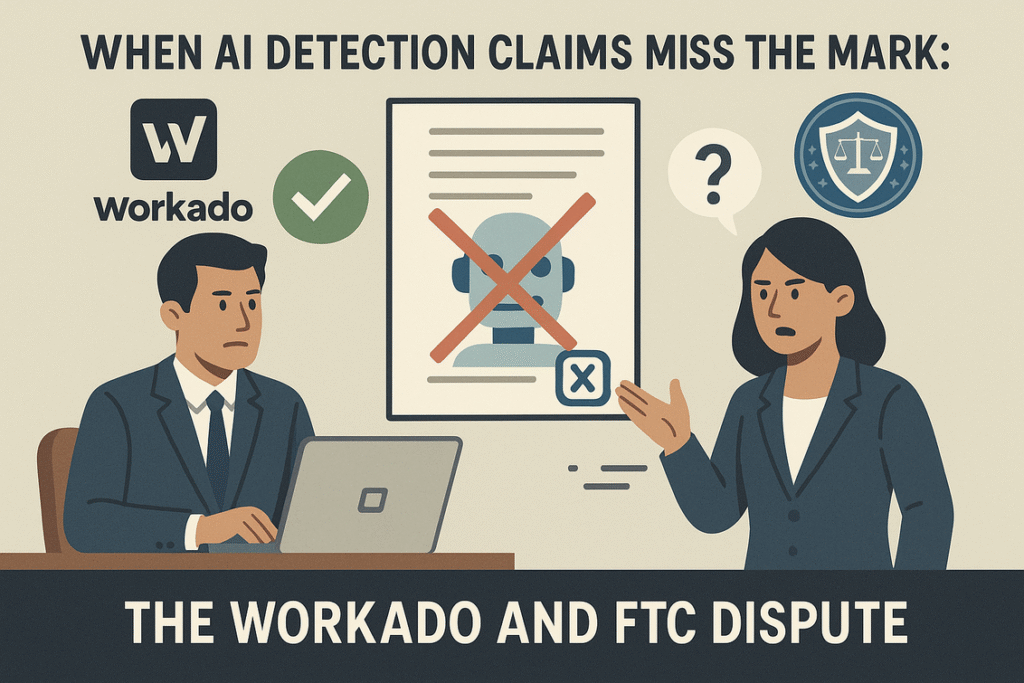
In the rapidly evolving world of artificial intelligence, the ability to distinguish between human-written and AI-generated content has become increasingly valuable. Companies like Workado have stepped in with tools designed to identify AI-produced text, promising high accuracy rates to help users navigate this new digital landscape. Recently, however, Workado faced scrutiny from the Federal Trade Commission (FTC) for allegedly overstating the capabilities of their AI content detection tool, prompting a settlement that highlights the challenges of AI accountability and marketing ethics.
Workado had publicly asserted that their AI detector could identify machine-generated text with an impressive 98% accuracy rate. This claim attracted attention for its potential to be a game-changer in fields like education, journalism, and content moderation, where discerning the origin of text matters deeply. But according to the FTC, the tool’s detection performance was far less reliable—comparable to a random guess. This discrepancy raises important questions about the reliability of current AI detection technologies and the standards companies should meet before making sweeping public claims.
From an analytical standpoint, the Workado case shines a light on the broader issue of hype surrounding AI products. As the technology evolves, there is often a gap between what is technically feasible and what is commercially marketed. This gap can lead to inflated expectations and potentially mislead customers who depend on these tools for crucial decisions. It also underscores the difficulty in developing robust AI detectors that can keep pace with the sophistication of AI-generated content, especially as generative models grow more advanced and harder to differentiate from human work.
Moreover, the FTC’s intervention signals growing regulatory attention to AI-related claims and transparency. Companies offering AI tools will likely face greater scrutiny moving forward, encouraged to back their assertions with rigorous testing and verifiable data. This regulatory approach can drive the industry toward higher standards, fostering consumer trust and innovation built on integrity rather than hype. It also serves as a reminder that as AI permeates more aspects of life, oversight is crucial to ensure technologies serve users ethically and effectively.
In conclusion, the Workado settlement is a cautionary tale about the importance of transparency and accuracy in the burgeoning AI detector market. While the promise of nearly flawless AI content detection is alluring, the technology still faces significant hurdles. Both developers and users must navigate this space with a healthy dose of skepticism and a commitment to ongoing validation. As AI continues to shape how we create and consume information, responsible communication about capabilities will be key to fostering trust and progress in the field.
No statistics available at this time.

Source: https://cyberscoop.com
📋 Summary
The Federal Trade Commission reached a settlement with Workado, an Arizona-based company producing an AI content detector, after finding the company’s claims about its tool’s near-perfect accuracy were unsubstantiated. The FTC required Workado to retract these claims, notify customers, and ensure all future representations about the tool’s effectiveness are supported by ongoing, reliable scientific evidence. The case highlights the challenges in developing AI detection tools that remain accurate over time amid rapidly advancing AI technologies, emphasizing the need for continual updates and rigorous validation.