Keywords:
business / artificial intelligence, business
Sentiment:
neutral
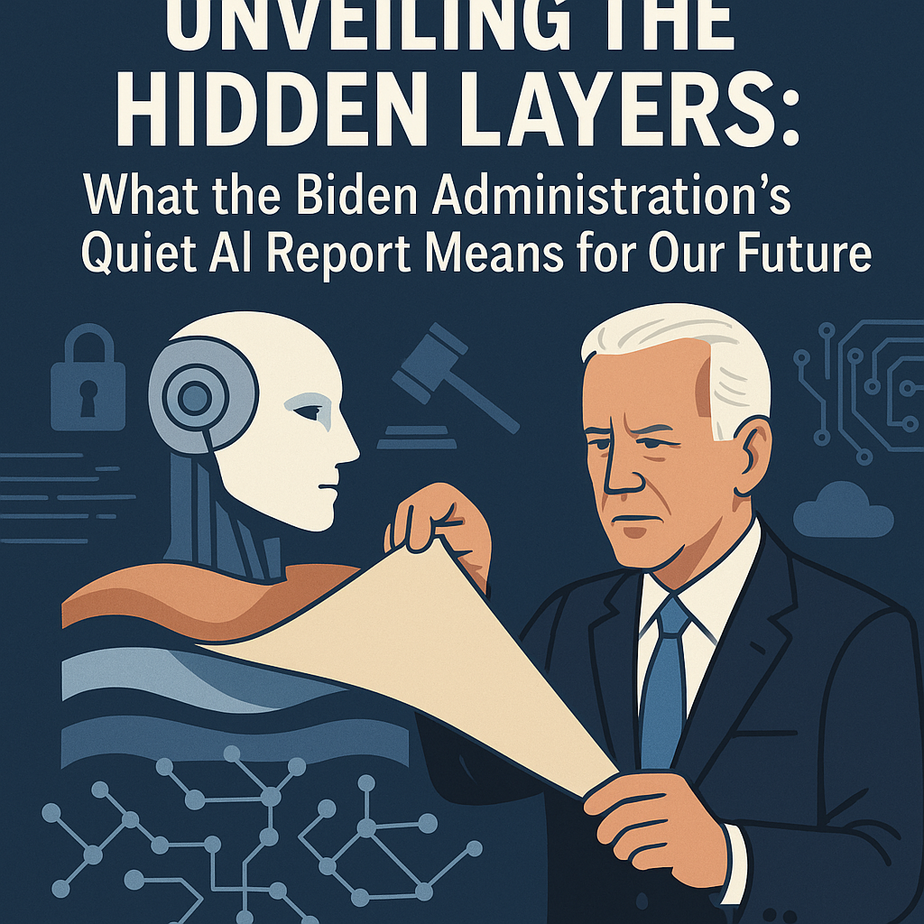
In the rapidly evolving landscape of artificial intelligence, transparency and oversight are crucial to ensure safety and public trust. Recently, it came to light that the Biden administration commissioned an extensive study on frontier AI models, yet the findings have not been made publicly available. This unpublished report sheds light on the government’s cautious approach to AI governance but also raises questions about accountability and the balance between secrecy and public interest.
The decision to withhold the report could be interpreted from multiple angles. On one hand, sensitive details about AI technologies and their potential vulnerabilities may require careful handling to prevent misuse or panic. On the other hand, the absence of public discourse limits external scrutiny and slows collaborative progress in mitigating AI risks. Such a gap pauses the critical conversation between policymakers, tech developers, and society at large, which is essential for crafting effective, ethical AI policies.
Beyond procedural concerns, the existence of this report signals the administration’s recognition of AI as a pivotal frontier requiring proactive measures. Frontier models represent the cutting edge of AI innovation but are also associated with unknown, sometimes unpredictable behaviors. By commissioning this study, the government acknowledges the necessity of understanding these risks comprehensively while preparing regulatory frameworks that can adapt swiftly in this fast-paced domain.
However, withholding knowledge generated from public resources can be a double-edged sword. It risks undermining public confidence and fostering suspicion about governmental intentions. The future of AI safety depends not only on the technical robustness of models but also on fostering a collaborative environment where experts from diverse disciplines and the public are engaged. Transparency acts as a catalyst for trust and innovation, encouraging responsible AI development grounded in shared values.
Ultimately, the unpublished report serves as a reminder that AI governance is a delicate balancing act between urgency, safety, and openness. Moving forward, it is imperative for administrations to find pathways that allow them to share crucial insights without compromising security. Only through dialogue and transparency can society harness AI’s potential safely, ensuring technological advancements serve the greater good rather than conceal risks in the shadows.
No statistics available at this time.

Source: https://www.wired.com
📋 Summary
At a 2024 red teaming event organized by NIST and Humane Intelligence, AI researchers identified numerous vulnerabilities in cutting-edge AI systems, revealing shortcomings in the current US government AI risk management framework; however, the resulting report was not published, likely due to political shifts and changes in administration priorities, limiting the AI community’s ability to learn from the findings and improve safety standards.