Keywords:
tech policy, artificial intellience
Sentiment:
neutral
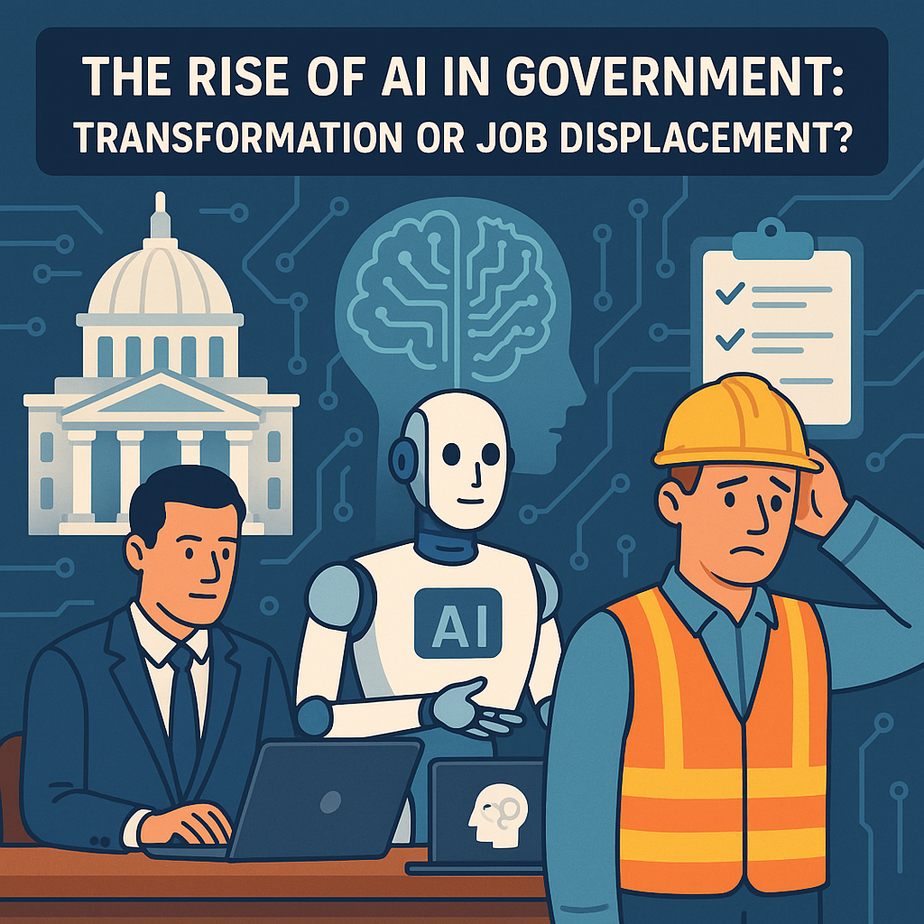
Artificial intelligence has increasingly become a game-changer in public administration, reshaping how government agencies operate. The latest developments suggest that generative AI tools are being deployed to streamline tasks traditionally handled by federal employees. This technological shift presents an exciting frontier but also raises important questions about the future of work within government agencies and the broader implications for public service delivery.
Reports indicate that the integration of AI in government processes could lead to a significant reduction in the federal workforce, with estimates pointing to as many as 300,000 positions potentially affected by the end of the year. While automation promises improved efficiency and cost savings, the scale of workforce impact demands careful consideration. Such a sweeping change may threaten job security for many public servants who have long contributed to vital functions like data processing, administrative support, and regulatory compliance.
From an analytical standpoint, the move towards AI-driven government operations embodies both opportunity and risk. On one hand, automating repetitive or complex tasks through AI can free up human workers to focus on higher-level responsibilities that require creativity, ethical judgment, and empathy—elements machines cannot easily replicate. On the other hand, the speed and extent of AI adoption could outpace the government’s ability to retrain workers or redesign roles effectively, potentially leaving many behind in the transition.
The ethical dimension cannot be ignored either. As AI assumes a more prominent role in decision-making processes, transparency and accountability become paramount. Citizens deserve clarity on when and how AI influences services ranging from benefits distribution to regulatory assessments. Moreover, the government must ensure that AI applications do not inadvertently perpetuate biases or reduce oversight in essential public functions.
In conclusion, while generative AI offers promising tools to modernize government operations and enhance efficiency, it also underscores the need for a balanced approach to technology adoption. Policymakers must prioritize thoughtful workforce planning, ethical safeguards, and transparent communication to navigate this evolution. Ultimately, the goal should be to harness AI as a means to strengthen public service without compromising the foundational human elements that make governance responsive and equitable.
No statistics available at this time.

Source: https://gizmodo.com
📋 Summary
The U.S. government, under the Trump administration, is rapidly deploying generative AI chatbots across various federal agencies to automate tasks and improve efficiency, but experts warn that the technology is still immature, prone to errors—especially in complex legal and procurement contexts—and is being rolled out too quickly without sufficient integration or safeguards, raising concerns about accuracy and effective use.