Keywords:
mediatransformationupdate
Sentiment:
neutral
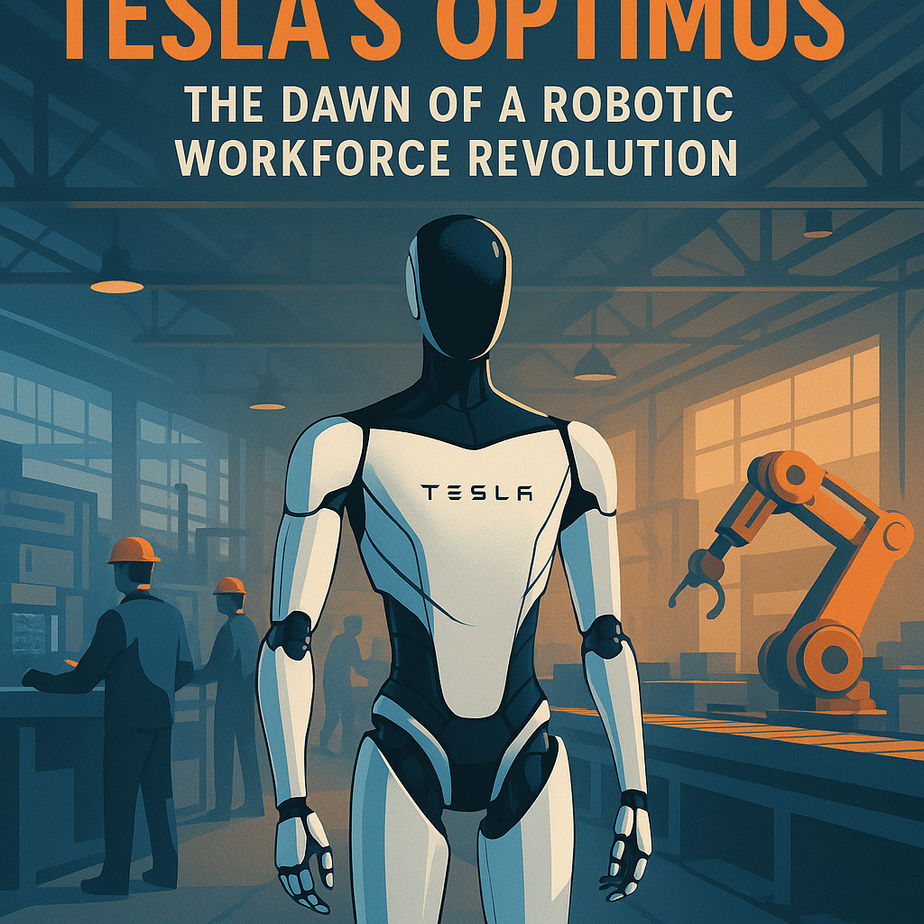
Elon Musk’s recent unveiling of Tesla’s Optimus humanoid robots signals a bold leap toward transforming factory operations as early as 2025. Designed to operate alongside human workers or independently within manufacturing settings, these robots represent a convergence of cutting-edge technologies including advanced AI and potentially quantum computing applications. Tesla’s vision aims not only to streamline production but also to significantly cut operational costs, pointing to a future where labor-intensive processes are increasingly automated.
The integration of Optimus robots highlights a broader trend in agentic AI—autonomous systems capable of decision-making and adaptive behavior in dynamic environments. What makes Tesla’s approach intriguing is the attempt to create versatile humanoid robots rather than task-specific machines. This versatility could unlock unprecedented flexibility in manufacturing lines, allowing rapid adjustments to production demands without the extensive retraining or retooling typically required. However, this also raises questions about reliability, safety, and the scope of human oversight necessary to maintain trust in such autonomous collaborators.
From an ethical standpoint, the deployment of humanoid robots in factories inevitably stirs concerns about job displacement and the social impact on workers. While automation often boosts productivity, it simultaneously challenges traditional employment models and raises the imperative for executive leadership to manage workforce transitions compassionately and strategically. Reskilling programs and new labor policies will be critical to ensure that technology supports human potential rather than simply replacing it.
Financially, Tesla faces a complex path toward monetizing this robotic platform. Bringing such advanced machinery from prototype to mass production entails significant industry and technical hurdles. The cost-benefit equation must justify investments for prospective customers, which depends on the robots’ reliability, maintenance, and compatibility with existing manufacturing ecosystems. Executives must steer through these challenges while fostering innovation cultures that embrace both the risks and opportunities presented by this technological shift.
Ultimately, Tesla’s Optimus robot initiative represents more than just a new product line; it embodies a transformative moment for manufacturing and the future of work itself. As automation technologies evolve rapidly, balancing technological progress with human-centered values will determine the shape of the industrial landscape. If executed thoughtfully, Optimus could set a benchmark for responsible innovation, enabling factories to become smarter and more sustainable while empowering workers to thrive alongside their robotic counterparts.
No statistics available at this time.

Source: https://www.webpronews.com
📋 Summary
Elon Musk announced Tesla’s plan to deploy humanoid robots named Optimus in factories starting in 2025, reflecting a broader industry shift toward autonomous robotics and AI-driven automation. This advancement aligns with trends in agentic AI, quantum computing, and sustainable innovations that could significantly reduce labor costs and transform manufacturing. However, challenges remain in monetization, ethical governance, regulatory compliance, and workforce adaptation, making the success of these technologies dependent on careful navigation of risks and investments.