Keywords:
media, news, curation, aggregator, breaking news
Sentiment:
neutral
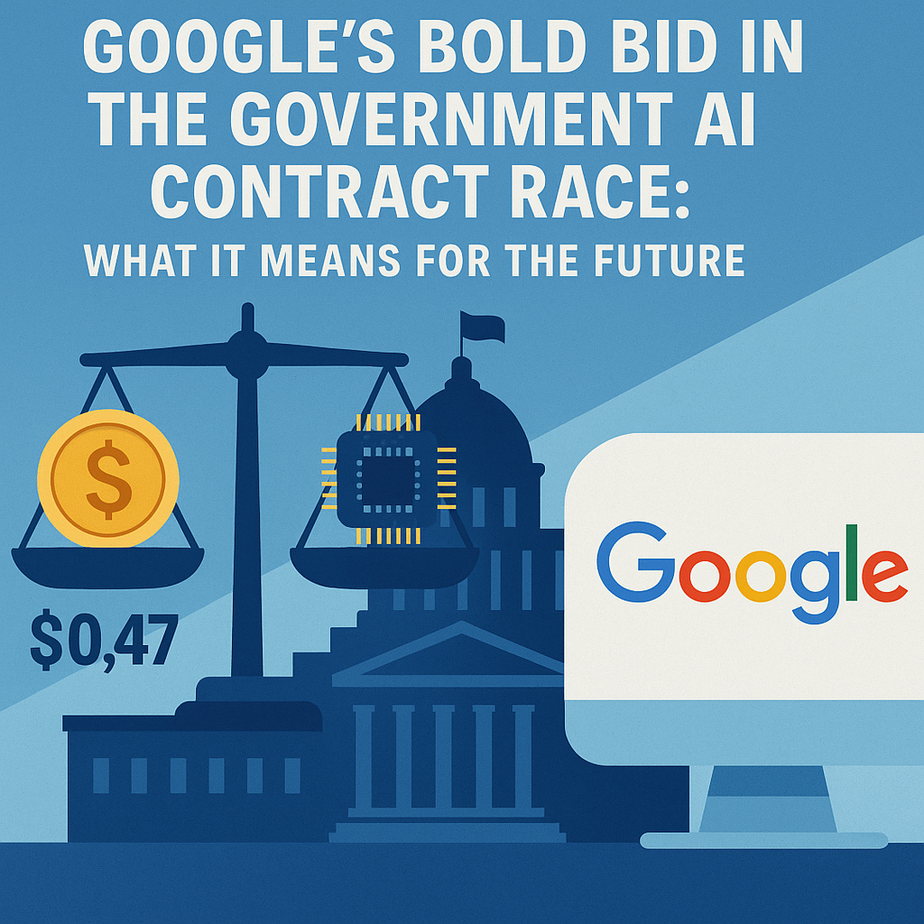
In a recent move that underscores just how fiercely the battle for government AI contracts has intensified, Google has stepped up with a surprisingly aggressive offer. By proposing a $0.47 per unit deal, Google is not only signaling its commitment to securing Uncle Sam’s attention but also shaking up the emerging market for large generative AI models. This pricing strategy undercuts its rivals and reflects the high stakes involved when tech giants vie for lucrative government partnerships.
Google’s entry into this discount pricing frenzy follows similar efforts by Anthropic and OpenAI, both of which have also shown a willingness to offer enticing short-term deals. While these bargains might appear lucrative on the surface, they raise important questions about long-term sustainability and the true cost of innovation. Are these discounts simply strategic moves to lock in government clients, or do they risk commoditizing AI services and pressuring providers to sacrifice quality for quantity?
From an analytical perspective, Google’s approach can be seen as a double-edged sword. On one hand, it could help the government access cutting-edge technology at reduced costs, accelerating public sector adoption of AI tools. On the other hand, the aggressive pricing could drive unhealthy competition among AI developers, potentially stifling the collaborative innovation that the field desperately needs. It might also set a precedent that undervalues the complexity and resources required to develop sophisticated AI models.
Moreover, this pricing rivalry highlights the growing strategic importance of AI in government operations. As public institutions increasingly seek to harness AI for various applications—ranging from cybersecurity to public health—tech companies are eager to not just sell products but establish long-term partnerships. Locking in the government as a client could provide these companies with steady revenue streams and valuable data, enhancing their AI models and market dominance.
In conclusion, while Google’s discounted bid represents a savvy business tactic in the immediate term, it also shines a light on broader trends shaping the AI industry. The rush to offer unbeatable deals may benefit short-term government budgets but could challenge the ecosystem’s health and innovation pipeline over time. As this competition unfolds, it will be crucial to balance cost-efficiency with sustainable development, ensuring that the pursuit of contracts doesn’t come at the expense of breakthrough progress in AI technology.
No statistics available at this time.

Source: https://biztoc.com
📋 Summary
Major generative AI companies, including Google, Anthropic, and OpenAI, are now all participating in discounted deals with the U.S. government, although the terms of these agreements are considered questionable in the short term.