Keywords:
ai vulnerabilities, software development, artificial intelligence, coding tool, amazon
Sentiment:
negative
In the ever-evolving landscape of technology, even the giants aren’t immune to cracks in their seemingly impenetrable armor. Amazon, known for its relentless innovation and dominance in e-commerce, recently faced a subtle but significant challenge related to its AI-driven coding practices. This incident sheds light on a broader issue that many companies are grappling with but few are openly discussing: the hidden pitfalls of automated code generation and its impact on software security.
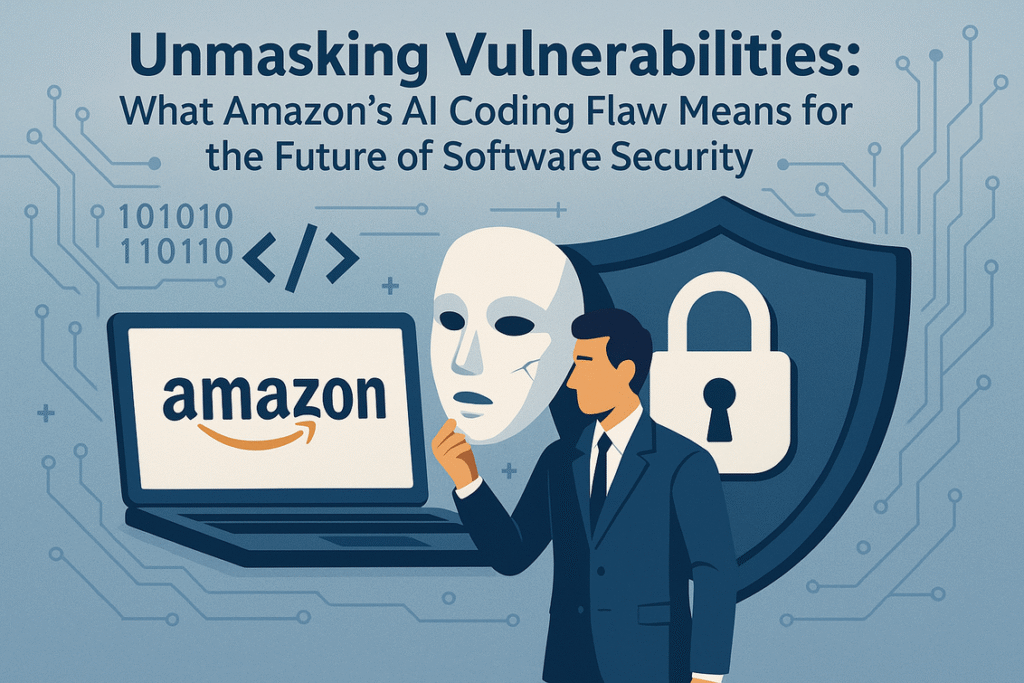
Amazon’s reliance on AI to assist or even automate parts of its software development process is a double-edged sword. While leveraging artificial intelligence accelerates development cycles and reduces human error, it also introduces a new category of vulnerability. The sophisticated algorithms can sometimes replicate bad coding patterns or inadvertently disclose sensitive information within the codebase. This “dirty little secret” highlights that no matter how advanced the technology, human oversight remains indispensable in maintaining robust security standards.
What makes this scenario particularly concerning is how such security flaws often fly under the radar, escaping immediate detection by traditional code review mechanisms. AI-generated code can be complex and opaque, making it challenging for developers to trace the origin of certain flaws or backdoors. This opacity underscores a necessity for developing specialized tools and protocols designed to audit AI-assisted code comprehensively, ensuring that automation doesn’t become a blind spot in security frameworks.
From a strategic perspective, Amazon’s experience serves as a cautionary tale for other enterprises eager to integrate AI into their development workflows. The rapid adoption of AI tools should be paired with a renewed commitment to security best practices and the cultivation of teams skilled at interpreting and supervising AI-generated output. Organizations must steer away from over-reliance on automation, instead embracing a balanced approach where human expertise and machine efficiency coexist harmoniously.
Ultimately, Amazon’s recent coding predicament is more than just a hiccup for the company; it’s a moment of clarity for the tech industry at large. It reminds us that as we journey deeper into an AI-enhanced future, vigilance, transparency, and adaptability will be the pillars safeguarding our digital infrastructure. Balancing innovation with security will be crucial to unlocking AI’s true potential without inadvertently opening doors to new vulnerabilities.
No statistics available at this time.

Source: https://www.livemint.com
📋 Summary
Amazon recently faced a security breach when a hacker exploited its AI-powered coding tool, Q, by submitting malicious instructions through a public Github repository that caused the tool to delete files on users’ computers. This incident reveals a growing and largely unaddressed security vulnerability in AI coding tools, highlighting the broader risks organizations face as AI becomes widely used in software development. Despite AI’s efficiency benefits, these tools introduce new attack vectors, emphasizing the need for greater security awareness, human oversight of AI-generated code, and more robust protections across the industry.